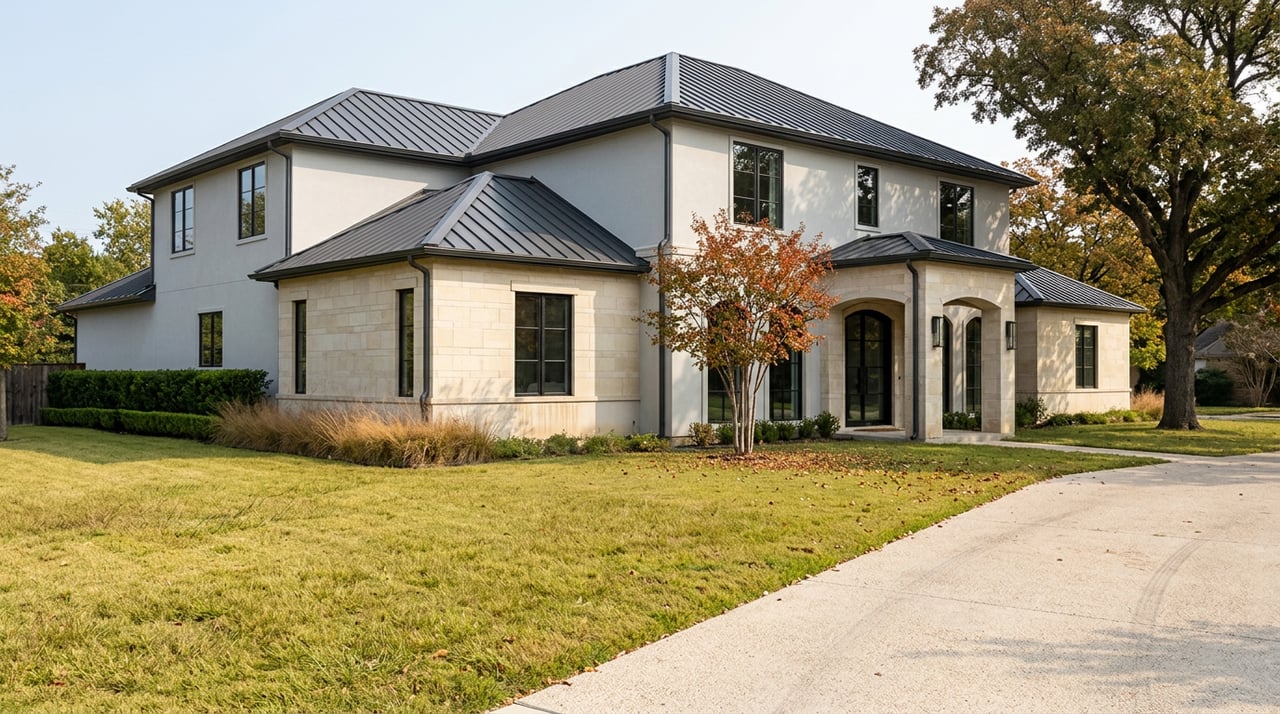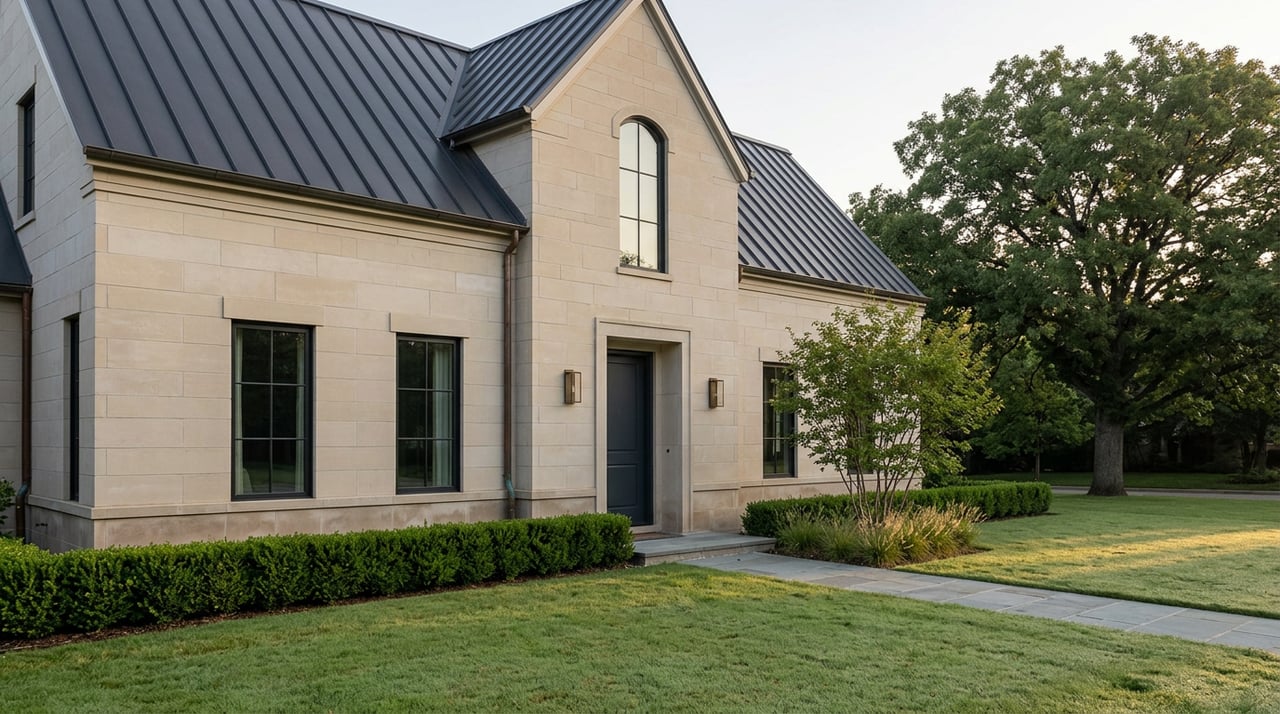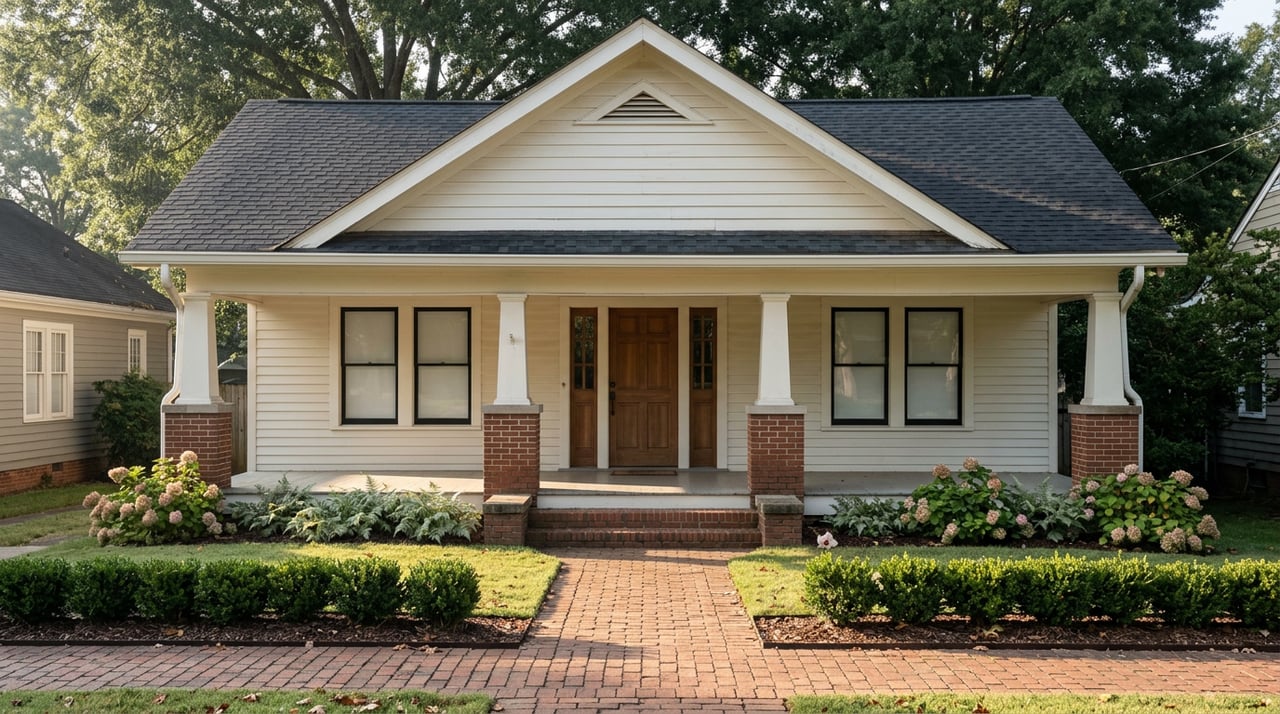
Every fall, Meridian-Kessler puts its houses on display and nobody questions why. The tour has run long enough that grandparents who once walked it as kids now hand out programs on their own front steps. A couple of miles north, the other place residents treat as shared ground, the mall-turned-open-air-center at Keystone and 62nd, is quietly for sale, and its most recognizable tenant might not survive the next round of construction permits.
Those two facts sitting next to each other on the same September calendar tell you something about how Washington Township actually works. The neighborhood associations have spent fifty years protecting front porches and mature trees. The commercial corner everyone drives past to get anywhere has never had that kind of protection, and this year it's showing.
One Township, No Single Main Street
Washington Township counted 138,678 residents as of the 2020 census, spread across a patchwork of named neighborhoods that rarely agree on much beyond a shared ZIP code cluster: Meridian-Kessler, Butler-Tarkington, Broad Ripple, Glendale, Nora, Keystone at the Crossing. Meridian-Kessler alone runs from Kessler Boulevard and Meridian Street on its western and northern edges down to 38th Street, with the old Monon Railroad corridor as its eastern boundary. Butler-Tarkington sits just west, an 920-acre stretch bounded by the Central Canal, Meridian Street, 38th Street and Michigan Road, named for Butler University and its former resident, novelist Booth Tarkington.
None of that geography adds up to a single Main Street. What it adds up to instead is a township where the historic residential zones are fiercely maintained and the shared commercial ground in between answers to a different set of incentives entirely.
The Corner Everyone Treats As Downtown
Glendale Town Center is that commercial ground. Indianapolis-based Kite Realty Group bought what was then Glendale Mall for $20 million in 1999 and spent the following years converting it from an enclosed mall into the open-air center that exists today. As of the most recent tenant snapshot, the anchors are Target, Ross Dress for Less, Old Navy, Five Below and Indiana University Health, with outlots including Buffalo Wild Wings, Culver's, Panda Express and Panera Bread. Old Navy's presence is itself a small reversal: the retailer returned to the center after a fifteen-year absence.
None of that reads as instability on its own. What changes the picture is what Kite has been doing with the rest of its portfolio. In a February 2026 investor release, the company said it sold thirteen properties and two land parcels in 2025 for roughly $621.7 million, describing the moves as sharpening its holdings. Then, in an April 30, 2026 report, the Indianapolis Business Journal said Kite is exploring a sale of Glendale Town Center itself. No asking price, broker, or timeline has been made public since.
For a shopping center that functions as the township's closest thing to a town square, a sale means a new owner will decide what it becomes next, and that decision is happening at the same moment a separate, already-filed proposal would demolish one of the center's longest-running tenants.
What The Theater Proposal Actually Says
The Landmark Glendale 12 has run under one name or another since 2000, first as a Kerasotes house, briefly as an AMC in 2010, then as Landmark starting that November. That's more than twenty-five years of Friday nights for a stretch of the township that doesn't have another walkable theater.
A preliminary site plan filed by Kite and developer Milhaus would replace it with roughly 193 apartments across four buildings, plus 48 townhomes across eight buildings on an adjoining lot on Rural Street, the same lot where the Broad Ripple Farmer's Market has set up in warmer months. As of the most recent public reporting, the plan still needs rezoning approvals and public hearings before any demolition can start, so nothing here is finished business. But the filing exists, and the theater's future is genuinely in question in a way the neighborhood's historic housing stock has never had to be.
One longtime moviegoer, Pearl Davis, put it plainly when she learned of the plans: "so it would be sad. It would be truly missed."
Held Steady vs. In Motion
| What hasn't changed | What's currently in motion |
|---|---|
| MKNA's home tour, running since 1973 | Kite Realty exploring a sale of Glendale Town Center (April 2026) |
| Meridian Street's National Register listing (1986) | A filed proposal to demolish the Landmark Glendale 12 for ~240 housing units |
| MKNA's 18,000-plus represented residents | Old Navy's return after a 15-year absence, one of several recent tenant swaps |
| The Vi Walker Community Grant Program, funding neighborhood projects for two decades | The farmer's market lot on Rural Street, named in the same redevelopment filing |
The Tour That Hasn't Missed A Beat
Set against all of that, the Meridian-Kessler Home Tour is almost stubbornly unchanged. This year it runs September 25 through 27, and the weekend traditionally opens Friday evening with a Twilight Tour at the Basile Opera Center on North Pennsylvania Street, a preview night with dinner and a silent auction before the weekend's self-guided walk through the neighborhood's houses.
MKNA started the tour back in 1973 to encourage "continued property improvement and esprit de corps" among residents, and the group now represents more than 18,000 residents, businesses and stakeholders across the eight zones that make up the neighborhood. Proceeds from the weekend fund the association's Vi Walker Community Grant Program, which has put more than $425,000 back into local schools, gardens, first responders and agencies like Coburn Place over the past twenty years. The stretch of Meridian Street that anchors much of the tour route, between 40th Street and Kessler Boulevard, has carried a National Register of Historic Places listing since 1986.
That's the contrast worth sitting with. A volunteer-run walking tour has kept its format, its venue and its charitable purpose intact for more than fifty years. A shopping center a couple of miles north, owned by a company that just moved over $600 million in property in a single year, doesn't have that kind of continuity built in, and this fall it's showing the difference.
New Tables While You Wait On The Verdict
The neighborhood's dining scene keeps moving regardless of what happens at Glendale. Slapfish, the seafood counter concept, has a fall 2026 opening planned for a walkable spot in Meridian-Kessler, giving the corridor another sit-down option that doesn't depend on driving out to Keystone Avenue.
It's a small thing next to a mall's ownership status, but it's also the kind of detail that tells you the neighborhood's day-to-day texture isn't waiting on anyone's real estate decision. People are still opening restaurants here. The tour committee is still printing programs. The uncertainty is real, but it's contained to one corner of a township that has plenty of others.
What This Means If You're Paying Attention
If you live in Washington Township, the practical read is this: block the Home Tour weekend if you haven't already, because it will run exactly as it has for decades. Keep half an eye on the public hearings for the Glendale site plan, because that process is the part actually capable of changing the neighborhood's daily geography, not the tour and not a new seafood counter. The permanence and the flux are happening in the same handful of neighborhoods, and they're not telling the same story.
If you're the kind of resident who thinks about these shifts not just as neighborhood news but as questions about timing, value, and what a changing commercial corridor might mean for your own address, that's a conversation worth having before the headlines get ahead of you. The team at Homes of Worth tracks these corridors closely, including what's unfolding around Washington Township, and can walk through what it might mean if you're weighing a move of your own. Book a Free Consultation whenever you're ready to talk specifics.